
Dental Implant Failure & Salvage
Renew the Health & Stability of Your Dental Implants

Dental implants have a remarkable success rate of more than 95%. As amazing as that is, though, we must still acknowledge that they do fail in rare cases. If you ever notice unusual symptoms in your implants, contact us right away. Our team will do all we can to address the situation in the most conservative way possible. Our dental implant salvage services may be just what you need to once again enjoy a complete, strong, and healthy smile!
Why Do Dental Implants Fail?
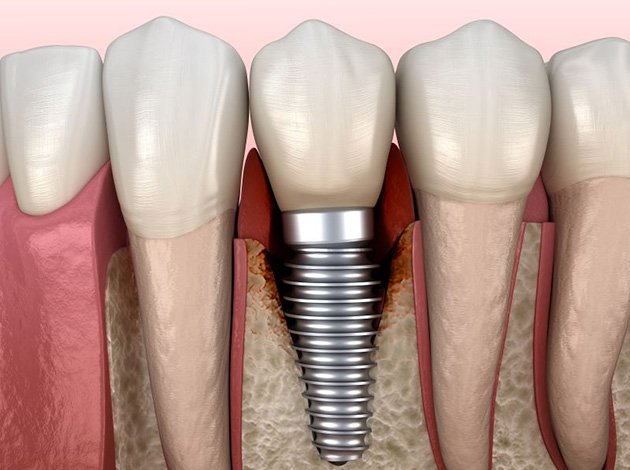
When dental implants fail, it is often due to an infection known as peri-implantitis. This is a type of gum disease that develops when harmful bacteria sneak beneath the gumline and attack the tissue around an implant. Eventually, peri-implantitis can cause so much damage that the implant no longer has a stable base of support. In many cases, missteps in oral hygiene contribute to the development of this infection.
Other potential contributors to dental implant failure include:
- Underlying medical conditions, such as bone diseases or certain types of cancer
- Physical trauma, possibly caused by an accident or prolonged teeth grinding
- Failed osseointegration (failure of the body to properly bond with an implant)
Symptoms of Failed Dental Implants

Dental implant failure can happen at any time, whether it is weeks, months, or even decades after the initial placement surgery. That is why you should always monitor your mouth and take action at the first sign of a problem.
Some potential indications of dental implant failure include:
- Unusual pain. Once you heal from dental implant surgery, you should enjoy pain-free function from your new teeth. Severe or prolonged discomfort is a big red flag.
- Difficulty chewing. It should be easy for you to eat with your implants. Challenges may indicate the possibility of failure.
- An implant feels loose. This could be a problem with the implant itself or the restoration (crown, bridge, or denture) that is attached to it.
- Signs of infection. Redness, swelling, gum recession, and pus could all point to the presence of peri-implantitis.
How Dental Implant Salvage Works

It is important that you visit us as soon as possible after you notice that something is amiss with your dental implants. Early intervention might help you to avoid invasive, extensive, and expensive procedures.
When you come to our office, we will thoroughly examine your mouth and use advanced imaging equipment to look beneath your gumline. After we gather adequate information, we can suggest your next steps. In some cases, something simple — such as antibiotics or a new restoration — is all that is needed. If the situation is more severe, we might have to surgically remove the implant. Later, after you heal and undergo any necessary restorative care, you might be able to get a new one.